Over 90 percent of american homebuyers research contractors online before making contact. For builders, a strong website user experience now stands as the first handshake with potential clients. When a digital platform feels intuitive and reflects clear expertise, it goes beyond basic marketing to deliver real business results. This guide breaks down practical steps to help american builders turn their websites into trusted tools for client communication and lead generation.
Table of Contents
- Defining Website UX For Builders
- Types Of UX Elements That Matter
- How UX Drives Lead Generation
- UX Best Practices For Builders’ Sites
- Risks Of Poor UX For Builders
- UX Optimization Without Full Redesign
Key Takeaways
| Point | Details |
|---|---|
| User-Centered Design | Effective website UX for builders integrates user-centered principles that align with strategic business goals. |
| Key Design Elements | Prioritize responsive design, intuitive navigation, and clear information architecture to enhance user engagement. |
| Lead Generation Focus | Implement clear calls-to-action and interactive tools to convert website visitors into qualified leads. |
| Incremental Improvements | Optimize website performance through targeted, strategic enhancements without the need for a complete redesign. |
Defining Website UX for Builders
Website user experience (UX) for builders is a strategic approach that transforms digital platforms from mere online brochures into powerful lead generation and communication tools. According to research from arxiv.org, effective web design requires integrating user-centered design principles that align with strategic business goals – a concept particularly crucial in specialized industries like off-site construction.
For modular and prefab builders, website UX encompasses more than aesthetic design. It involves creating intuitive navigation, clear information architecture, and engaging content that speaks directly to potential clients’ needs. The arxiv.org research emphasizes the critical importance of usability testing to ensure websites meet user expectations effectively. This means designing interfaces that allow contractors, developers, and homeowners to quickly find project details, understand construction methodologies, and initiate contact.
Key components of builder-focused website UX include:
- Responsive design that works seamlessly across mobile and desktop devices
- Clear project portfolios with high-quality visual documentation
- Transparent pricing and process information
- Easy-to-use contact and quote request forms
- Performance metrics and case studies demonstrating expertise
Ultimately, website UX for builders is about creating a digital experience that builds trust, demonstrates technical competence, and simplifies the complex process of modular and prefab construction. By prioritizing user needs and strategic communication, builders can transform their websites from static information sources into dynamic lead generation platforms.
Types of UX Elements That Matter
In the specialized world of modular and prefab construction websites, specific UX elements can dramatically influence user engagement and lead generation. According to research from arxiv.org, website design aesthetics play a critical role in user perception, with factors like color harmony and font selection significantly impacting how potential clients interact with and interpret a builder’s digital presence.
Visual Design Elements are particularly crucial in communicating professionalism and technical competence. As noted by Wikipedia, the aesthetic-usability effect suggests that visually appealing designs are perceived as more intuitive and trustworthy. For builders, this means creating a digital experience that balances technical information with compelling visual storytelling.
Key UX elements for builder websites include:
- Color palette reflecting brand identity and construction industry professionalism
- Clean, readable typography that enhances information clarity
- High-resolution project images and interactive portfolio galleries
- Intuitive navigation that guides users through complex project information
- Strategic use of white space to improve content readability
- Consistent design language across desktop and mobile platforms
Navigational and interactive elements transform a website from a static showcase into a dynamic communication platform.
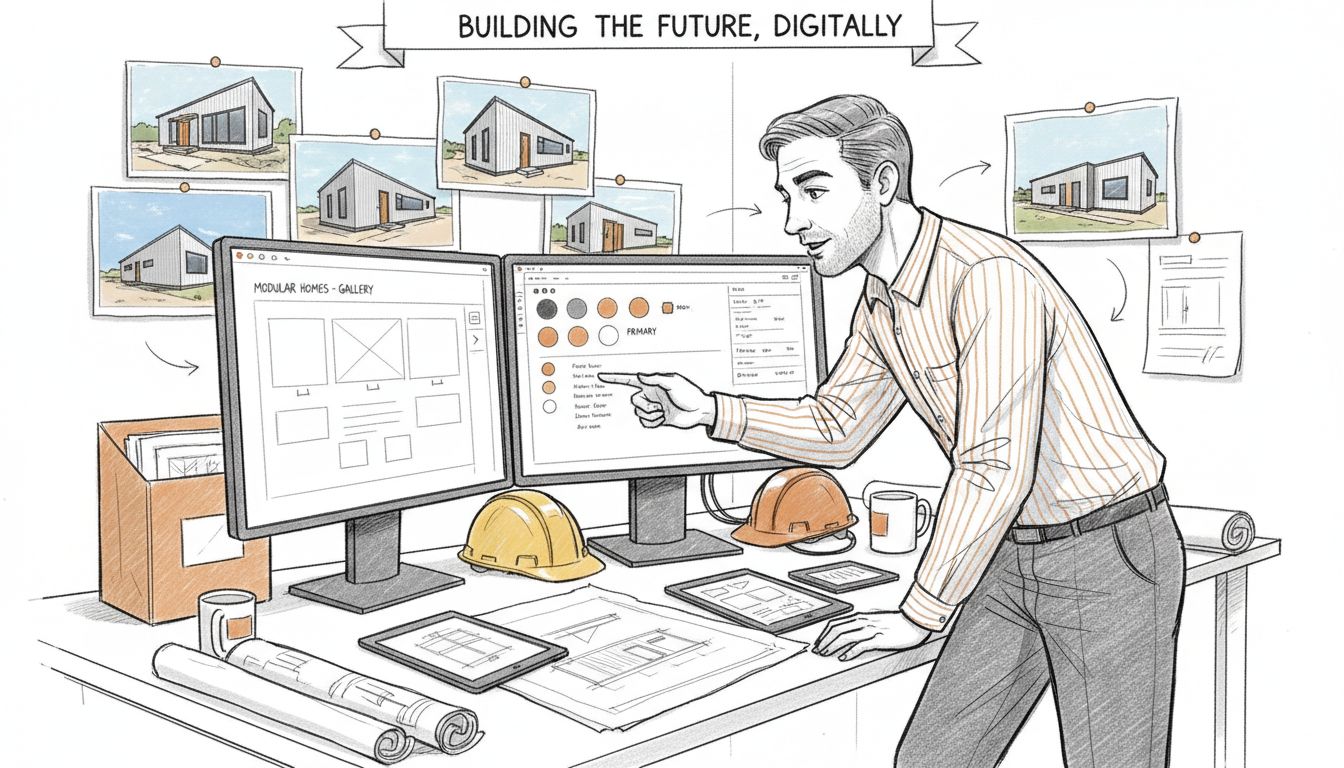 By carefully crafting each visual and functional component, builders can create digital experiences that not only inform but also inspire potential clients to take the next step in their construction journey.
How UX Drives Lead Generation
User experience design is a powerful catalyst for converting website visitors into qualified leads for modular and prefab builders. According to Uplift360, a well-crafted UX design can systematically build trust among potential clients by professionally showcasing portfolios, highlighting expertise, and creating intuitive pathways to engagement.
Lead generation in the construction industry hinges on creating digital experiences that communicate credibility and competence. Atomicdust emphasizes that robust internal linking and fast-loading pages are critical components that support seamless user journeys and encourage potential clients to take action. This means designing websites that not only look professional but also function with precision and speed.
Key strategies for UX-driven lead generation include:
- Creating clear, prominent call-to-action buttons
- Developing interactive project estimation tools
- Implementing easy-to-use contact forms
- Showcasing client testimonials and project success stories
- Providing downloadable resources like project guides or cost calculators
- Ensuring mobile responsiveness for on-the-go decision makers
Ultimately, effective UX transforms a builder’s website from a passive online brochure into an active lead generation machine. By prioritizing user needs, streamlining information architecture, and creating engaging interactive experiences, builders can significantly increase their chances of converting interested visitors into potential project clients.
UX Best Practices for Builders’ Sites
Building an exceptional website for modular and prefab construction requires a strategic approach that goes beyond basic design principles. User experience (UX) is the critical foundation that transforms a digital platform from a simple information repository into an engaging, conversion-driven tool. Websites for builders must balance technical complexity with intuitive navigation, creating seamless pathways that guide potential clients through their decision-making process.
The most effective builder websites prioritize clarity, transparency, and immediate value. This means designing interfaces that quickly communicate a company’s unique capabilities, showcase previous projects, and provide clear mechanisms for potential clients to initiate contact. Key visual and functional elements should be strategically placed to reduce cognitive load and streamline user interactions. Website Optimization Guide for Builders offers insights into creating websites that not only look professional but actively support business growth.
Critical UX best practices for builders’ sites include:
- Implementing a clean, professional color palette reflecting industry expertise
- Creating intuitive navigation with logical information hierarchy
- Developing mobile-responsive designs that work across all devices
- Using high-quality, professional photography of completed projects
- Integrating clear and prominent call-to-action buttons
- Providing quick access to project estimates and consultation requests
- Showcasing client testimonials and project success stories
Successful UX design for builder websites is about creating a digital experience that builds trust, demonstrates technical competence, and makes complex construction processes feel approachable and exciting. By focusing on user needs and crafting an intentional digital journey, builders can transform their websites from passive online brochures into powerful lead generation platforms.
Risks of Poor UX for Builders
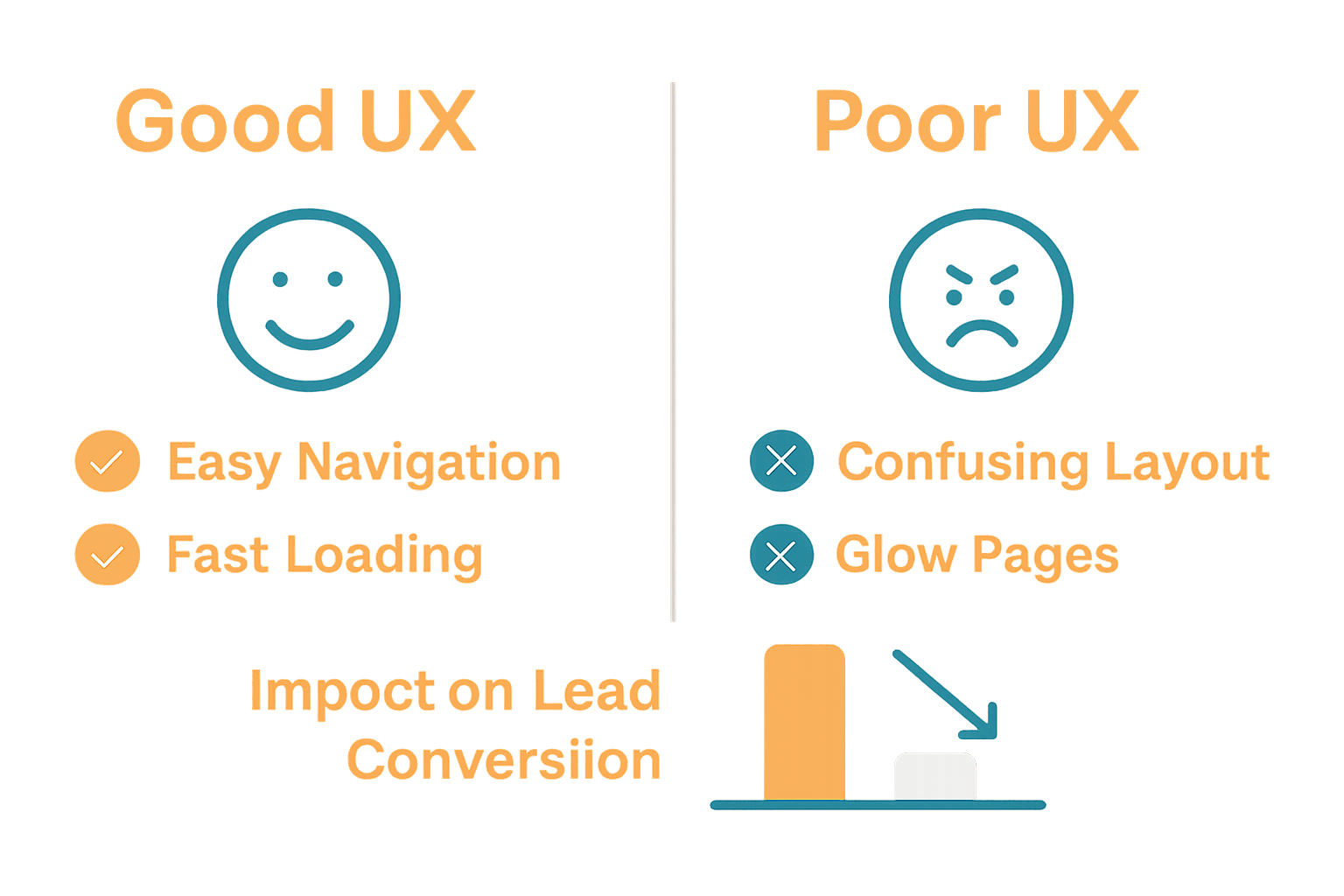
Poor user experience design can be catastrophic for modular and prefab construction websites, potentially destroying critical business opportunities. According to Wikipedia, ineffective website usability leads directly to user frustration and rapid abandonment, a particularly dangerous risk in an industry where trust and professionalism are paramount.
Website performance becomes critically compromised with substandard UX design. Design Hero emphasizes that contractors with poorly optimized websites risk losing potential leads through confusing navigation, unresponsive layouts, and complex user interfaces. These digital friction points can transform interested clients into missed opportunities, effectively undermining years of hard-earned professional reputation.
Significant risks of poor UX for builders include:
- Decreased user engagement and increased bounce rates
- Lost potential client inquiries and project opportunities
- Damaged professional credibility and perceived incompetence
- Reduced search engine visibility and ranking performance
- Negative first impressions that discourage potential project discussions
- Higher customer acquisition costs due to ineffective digital communication
- Competitive disadvantage against more digitally sophisticated builders
Ultimately, a builder’s website is often the first point of contact for potential clients. Neglecting user experience is equivalent to greeting a prospective customer with a disorganized, unprofessional office. By investing in thoughtful, user-centered design, builders can transform their digital presence from a potential liability into a powerful business development tool.
UX Optimization Without Full Redesign
Modular and prefab builders can significantly improve their website performance through strategic, incremental UX enhancements without undertaking a complete website overhaul. According to research from arxiv.org, it is possible to find a delicate balance between user experience and visual design elements that maximizes user conversion through targeted, methodical improvements.
Incremental optimization allows builders to make meaningful UX upgrades without the substantial time and financial investment of a full redesign. Wikipedia highlights the pluralistic walkthrough method as a powerful technique for identifying usability issues early, enabling builders to systematically address digital friction points and enhance overall user experience. This approach transforms website improvement from a daunting project into a manageable, step-by-step process.
Key strategies for UX optimization without a full redesign include:
- Conducting comprehensive user journey mapping
- Implementing quick visual hierarchy adjustments
- Streamlining navigation pathways
- Improving page loading speeds
- Enhancing mobile responsiveness
- Updating content clarity and readability
- Adding strategic call-to-action elements
- Integrating user feedback mechanisms
Successful UX optimization is about making intelligent, targeted improvements that collectively transform a website’s performance. By focusing on incremental enhancements, builders can create more engaging digital experiences that effectively communicate their expertise, build trust, and convert more potential clients without the complexity and expense of a complete website reconstruction.
Unlock Your Builder Website’s True Potential with Expert UX Solutions
Challenges like confusing navigation, lost leads, and low user engagement often stem from poor website UX design. This article highlights how critical intuitive navigation, clear call-to-actions, and responsive design are for converting visitors into high-value clients in the modular and prefab construction industry. If you are frustrated by the complexity of your website or worried about missing out on qualified leads, you are not alone.
At BoxBuild Agency we understand these pain points intimately. Our strategies combine deep industry insight with advanced digital marketing tools like Funnels and Google Ads to optimize your website’s UX and amplify lead generation. By focusing on usability improvements and data-driven enhancements powered by AI, we help modular builders communicate competence and build trust effortlessly.
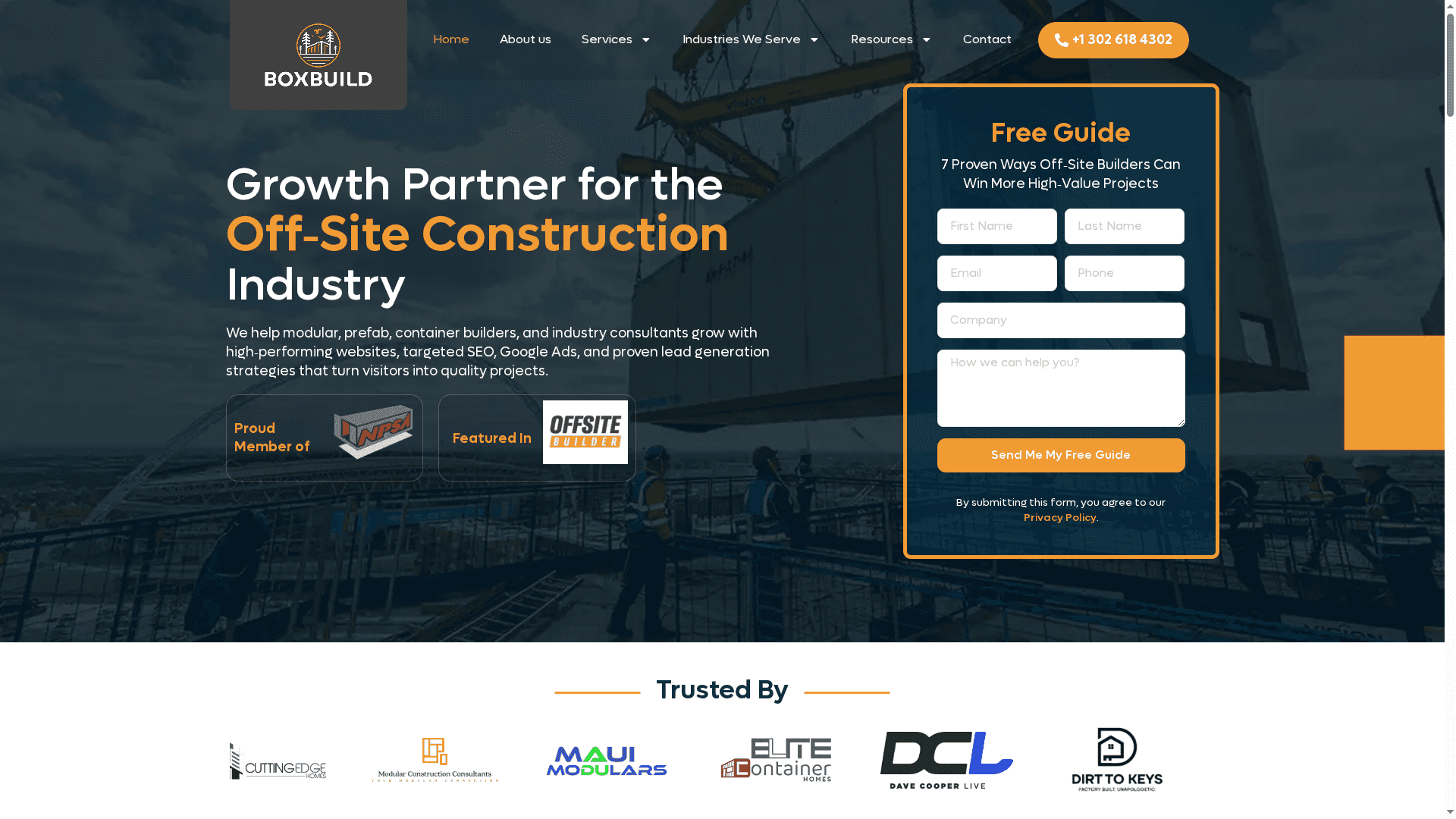
Ready to transform your website from a passive brochure into a dynamic lead generation engine Make the smart move now by partnering with BoxBuild Agency at https://www.boxbuild.agency/. Experience faster project inquiries and stronger client relationships with a website designed to deliver measurable growth.
Frequently Asked Questions
What is website UX for builders?
Website UX for builders refers to the strategic design and functionality of a website that transforms it from a simple brochure into an effective lead generation and communication tool, specifically tailored to meet the needs of contractors, developers, and homeowners.
Why is user experience important for modular and prefab construction websites?
User experience is crucial because it directly influences visitor engagement and lead conversion. A well-designed user experience builds trust with potential clients, showcasing professionalism and simplifying complex construction processes.
What key elements should be included in a builder’s website UX?
Key elements include responsive design, intuitive navigation, clear project portfolios, transparent pricing, easy contact forms, and effective use of visual design elements like color and typography to communicate professionalism.
How can builders optimize their website UX without a full redesign?
Builders can optimize their website UX incrementally by implementing strategies such as user journey mapping, improving page load speed, streamlining navigation, enhancing content clarity, and integrating user feedback mechanisms.