Over 60 percent of american builders say a lack of clear market strategy limits their growth in the booming off-site construction sector. Understanding what buyers want next sets thriving companies apart from those stuck competing on price alone. This guide reveals research-backed steps to uncover real client needs, organize your website for builders, and attract high quality leads with proven digital strategies tailored for the american modular market.
Table of Contents
- Step 1: Identify Key Market Opportunities And Audience Needs
- Step 2: Optimize Site Structure For Builder Workflows
- Step 3: Enhance Content For Off-Site Construction Seo
- Step 4: Implement Conversion-Driven Design Elements
- Step 5: Verify Performance And Measure Lead Quality
Quick Summary
| Key Point | Explanation |
|---|---|
| 1. Identify customer needs precisely | Conduct thorough market research to understand customer pain points and desires in the off-site construction market. |
| 2. Structure your website effectively | Organize your site to guide potential clients clearly through your offerings and highlight how your services stand out. |
| 3. Optimize content for SEO | Create valuable, targeted content addressing specific client questions to improve visibility and attract quality leads. |
| 4. Utilize conversion-driven design | Implement user-friendly design elements like clear calls to action and professional aesthetics to enhance lead generation. |
| 5. Measure performance and lead quality | Track relevant metrics to assess the effectiveness of your digital strategies and ensure you’re attracting the right clients. |
Step 1: Identify key market opportunities and audience needs
Unlocking profitable opportunities in the off-site construction market starts with strategic market research. By understanding your potential customers deeply, you can design targeted solutions that solve real problems and stand out from competitors.
According to OpenStax, effective market research involves analyzing unmet needs within specific demographics. For builders, this means diving into customer pain points in housing. Are potential clients struggling with traditional construction timelines? Do they want more customization? Are they seeking faster, more affordable housing solutions?
To segment your market effectively, leverage techniques from Wikipedia by breaking down potential customers into specific groups. For modular builders, these segments might include:
- First time homebuyers seeking affordable options
- Urban professionals wanting quick housing solutions
- Investors looking for rapid development strategies
- Eco conscious consumers interested in sustainable building
The key is moving beyond generic assumptions and gathering real data. Conduct surveys, interview potential clients, analyze local housing trends, and track emerging construction technologies. Your goal is identifying precise market gaps where your specific building approach can provide maximum value.
Warning: Avoid the trap of assuming you know what customers want. Always validate your assumptions through direct research and feedback. The most successful builders are those who listen closely to market signals and adapt quickly.
Step 2: Optimize site structure for builder workflows
Creating a website that speaks directly to your construction audience requires strategic planning and intentional design. Your site structure should guide potential clients seamlessly through their decision making journey while showcasing your unique capabilities.
According to LinkedIn, effective marketing strategies for construction companies start with a website that clearly highlights unique selling propositions. For modular builders, this means organizing your site to demonstrate workflow efficiency and project capabilities.
Consider structuring your website with these strategic sections:
- Portfolio showcase with detailed project breakdowns
- Clear service descriptions with specific builder workflows
- Technical specifications and customization options
- Client testimonials and case studies
- Transparent pricing and consultation process
Each section should tell a story about your building approach. Use high quality images, technical diagrams, and clear descriptions that help potential clients understand exactly how your modular building process works.
 Your goal is transforming complex construction concepts into digestible visual narratives that build trust.
Warning: Avoid overwhelming visitors with technical jargon. Your website should feel inviting and comprehensible to clients who may not have deep construction knowledge. Simple language and clean design win every time.
Ready to take the next step? Website Strategy for Builders can provide deeper insights into creating a compelling online presence that drives qualified leads directly to your business.
Step 3: Enhance content for off-site construction SEO
SEO is the secret weapon for modular builders looking to attract high quality leads and stand out in a competitive digital landscape. Your content strategy needs to go beyond basic keywords and focus on delivering genuine value to potential clients searching for innovative construction solutions.
According to LinkedIn, effective marketing strategies for construction companies require targeted content optimization. This means creating in depth resources that demonstrate your expertise and address specific client questions and pain points.
Key strategies for SEO enhanced content include:
- Develop comprehensive project case studies
- Create detailed guides about modular construction processes
- Answer common client questions with expert level content
- Include technical specifications and industry insights
- Integrate location specific keywords for regional targeting
Your content should speak directly to different audience segments. First time homebuyers want affordability and speed. Investors seek efficiency and scalability. Commercial developers prioritize technical specifications. Tailor your language and depth to match each group.
Warning: Avoid keyword stuffing or generic content. Search engines reward authentic expertise that genuinely helps potential clients understand complex construction approaches. Quality always trumps quantity.
Ready to dive deeper? Role of SEO in Off-Site Construction provides comprehensive insights into developing a winning digital strategy for your building business.
Step 4: Implement conversion-driven design elements
Transforming your website from a digital brochure to a powerful lead generation machine requires strategic design that guides potential clients seamlessly through their decision making journey. Every visual element and interaction point should intentionally move visitors closer to reaching out to your modular building team.
According to LinkedIn, effective marketing strategies for construction companies emphasize incorporating conversion driven design elements that enhance user engagement and lead generation. This means creating a website experience that feels intuitive, trustworthy, and compelling.
Key conversion design strategies include:
- Prominent and clear call to action buttons
- Strategic placement of contact forms
- High quality project images with client success stories
- Easy to navigate project portfolio sections
- Mobile responsive design with fast loading times
- Trust signals like client testimonials and industry certifications
Psychologically strategic design goes beyond aesthetics. Your website should communicate professionalism, reliability, and expertise within seconds of a potential client landing on your page. Use clean layouts, professional color schemes, and imagery that showcases the precision and innovation of your modular building approach.
Warning: Avoid cluttered designs or overwhelming visitors with too much information. Simple elegant interfaces that make taking the next step feel effortless will convert more effectively than complex layouts.
Ready to elevate your digital presence? Website Design & Development offers specialized strategies for creating high converting websites tailored to off-site construction professionals.
Step 5: Verify performance and measure lead quality
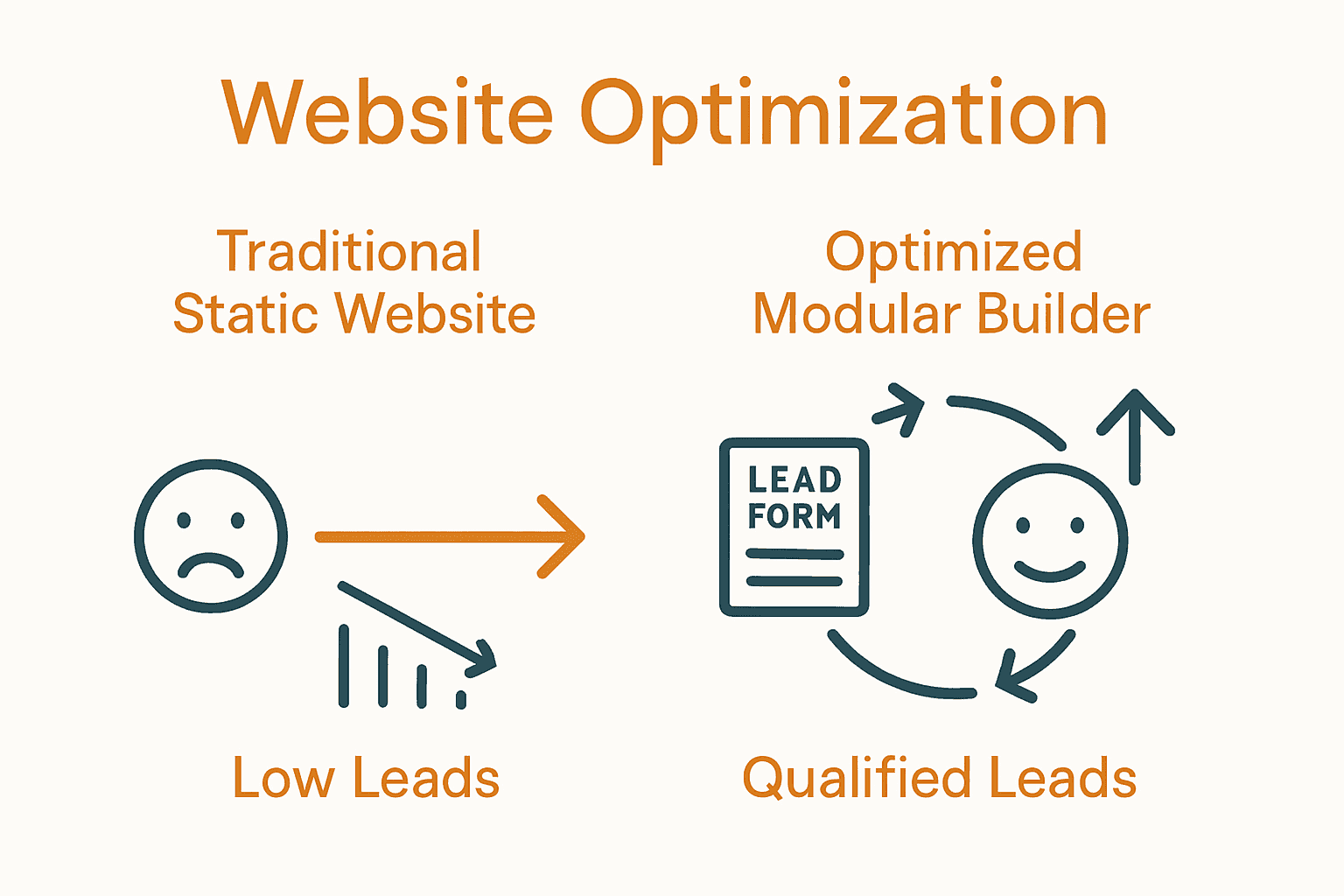
Building an effective digital strategy means continuously monitoring and refining your website performance to ensure you are attracting and converting the right clients. Performance tracking transforms your website from a static brochure into a dynamic lead generation engine that adapts to market needs.
According to LinkedIn, strategic marketing for construction companies requires rigorous data analysis to evaluate lead quality and refine marketing efforts. This means moving beyond vanity metrics and focusing on meaningful indicators of potential project success.
Key performance metrics for modular builders include:
- Conversion rate for project inquiry forms
- Average project value per lead
- Time spent on portfolio and service pages
- Geographical distribution of qualified leads
- Source tracking for lead origins
- Percentage of leads matching ideal client profiles
Qualifying leads requires more than just counting website visitors. You need to understand the characteristics of leads that actually convert into signed projects. Track not just volume but the specific attributes of leads that result in high value contracts.
Warning: Do not get lost in endless data points. Focus on metrics directly tied to your business growth and revenue goals. A few precise insights are more valuable than drowning in irrelevant statistics.
Ready to transform your data into actionable insights? AI Automations & Workflows can help streamline your lead tracking and qualification processes.
Unlock Your Builder Website’s True Potential Today
Struggling to convert visitors into qualified leads or unsure how to structure your site for maximum impact The “Website Optimization Guide for Builders” highlights key challenges like creating clear call-to-action paths and implementing conversion-focused design that turns lookers into committed clients. Your goals likely include boosting lead quality increasing engagement and simplifying the buyer’s journey while avoiding overwhelming technical jargon.
At BoxBuild Agency we understand these pain points intimately. Our expertise in Funnels – BoxBuild and Google Ads – BoxBuild complements your website optimization efforts with data-driven marketing and automation designed specifically for the off-site construction industry. We help modular and prefab builders not just attract visitors but generate high-value project inquiries that fuel real growth.
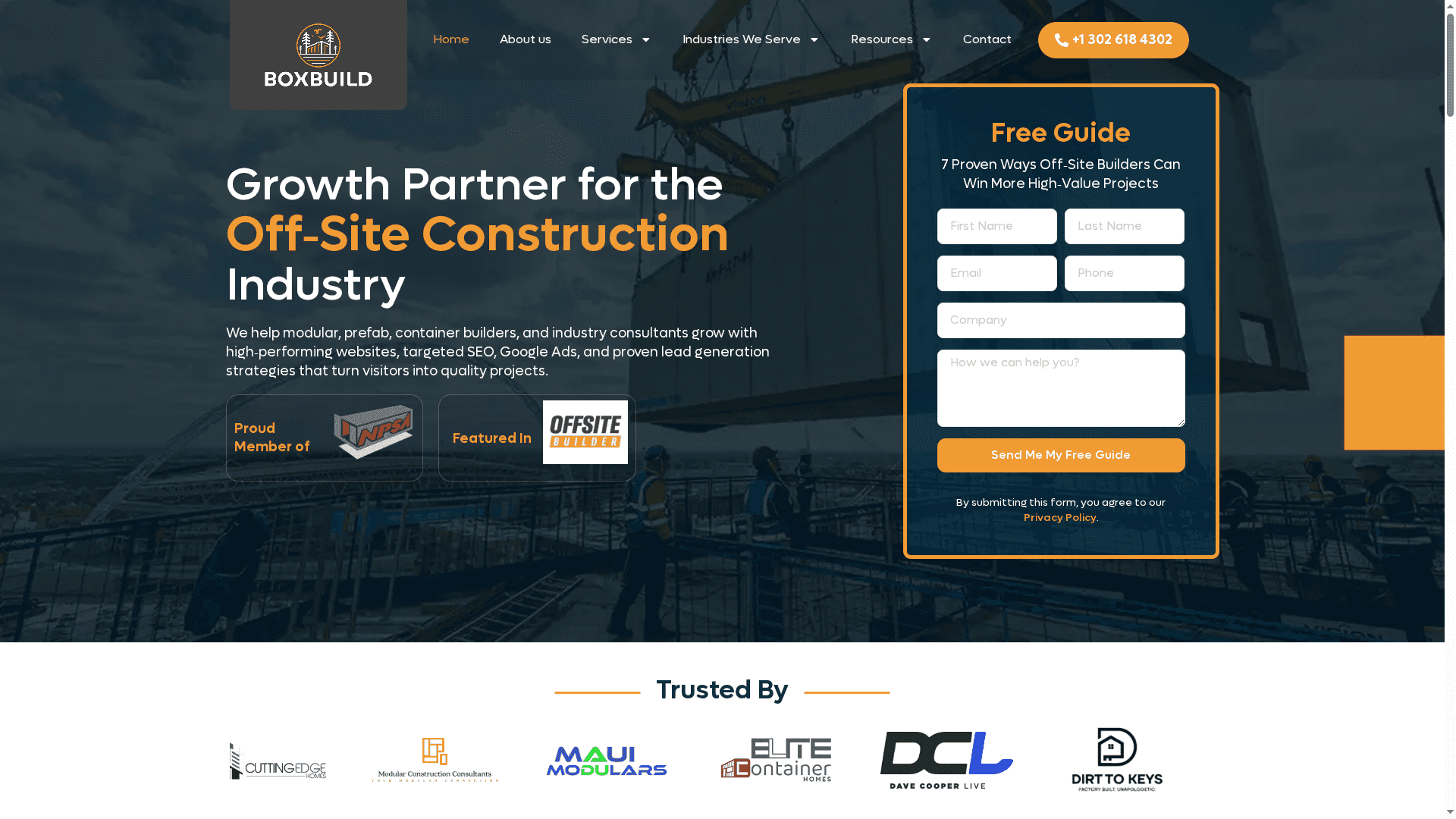
Take control of your digital growth now by partnering with experts who specialize in turning complex construction workflows into simple online experiences. Visit https://www.boxbuild.agency/ to learn how our strategic websites and lead generation systems can accelerate your sales pipeline. Every moment you wait could be a missed opportunity for your next big project.
Frequently Asked Questions
How can I identify key market opportunities in off-site construction?
To identify key market opportunities, conduct thorough market research to understand potential customers’ pain points. Utilize surveys and interviews to gather real data about what clients seek, such as faster construction timelines or affordable solutions.
What should my website structure include to engage potential clients?
Your website should have sections that clearly showcase your portfolio, service descriptions, and client testimonials. Organize these elements to guide visitors seamlessly through their decision-making process and highlight what makes your building approach unique.
How do I optimize my website content for better lead generation?
To optimize your website content, focus on creating in-depth resources addressing common client questions and pain points. Consistently use relevant keywords and include detailed guides or case studies that demonstrate your expertise in off-site construction.
What design elements should I implement to improve conversion rates?
Incorporate clear call-to-action buttons and strategically placed contact forms to guide visitors toward reaching out. Use high-quality images of your projects and success stories to build trust and enhance user engagement throughout the site.
How can I measure the effectiveness of my website in attracting leads?
Monitor key performance metrics such as the conversion rate of inquiry forms and the average project value per lead. Focus on meaningful insights over vanity metrics to understand which leads are most likely to convert into valuable contracts.
What ongoing actions can I take to keep improving my website’s performance?
Continuously review and analyze website data to identify trends in lead quality and engagement. Update your content regularly based on what resonates with your audience and adjust your strategies accordingly to maximize lead generation results.