Chasing every project inquiry can feel exhausting when only a handful turn into profitable modular home builds. For North American builders aiming to win high-value clients, refining how you qualify leads has never been more important. By focusing on targeted lead qualification strategies, you can attract projects that match your expertise, improve efficiency, and connect with homeowners interested in innovative, sustainable modular construction solutions.
Table of Contents
- Step 1: Assess Lead Channels For Modular Home Projects
- Step 2: Develop Targeted Lead Capture Strategies
- Step 3: Automate Lead Scoring And Segmentation
- Step 4: Implement Qualification Filters And Review Criteria
- Step 5: Verify Lead Quality Before Client Engagement
Quick Summary
| Key Insight | Explanation |
|---|---|
| 1. Optimize Lead Channel Selection | Analyze various lead channels for effectiveness in generating high-quality leads. Prioritize the channels with the best performance metrics. |
| 2. Tailor Lead Capture Strategies | Develop personalized client personas to enhance lead capture strategies, making them more relevant to individual client needs. |
| 3. Automate Lead Scoring | Implement automated lead scoring systems to prioritize leads based on engagement and potential fit, ensuring efficient follow-up. |
| 4. Establish Qualification Criteria | Create stringent qualification filters to assess project viability, aligning leads with company capabilities and values. |
| 5. Verify Lead Quality | Implement a thorough verification process to confirm lead potential, minimizing wasted resources on unsuitable prospects. |
Step 1: Assess lead channels for modular home projects
Successfully identifying and evaluating the right lead channels is crucial for modular home builders seeking high-quality project opportunities. This step involves systematically analyzing potential sources that can generate qualified residential construction leads.
Start by mapping out your current lead generation landscape. Research indicates that digital platforms have become increasingly important in construction marketing. Digital tools optimize project delivery through advanced targeting and engagement strategies. Key channels to evaluate include online platforms like Google Ads, targeted social media advertising on LinkedIn and Facebook, industry-specific directories, referral networks, and strategic partnerships with architects and real estate professionals.
Carefully analyze each channel’s performance metrics. Track conversion rates, cost per lead, lead quality, and alignment with your ideal client profile. Some channels might generate high volume but low-quality leads, while others produce fewer but more targeted prospects. Pay special attention to channels that connect with homeowners interested in sustainable and technologically advanced modular construction solutions. Expert interviews reveal supply chain optimization strategies that can help refine your lead generation approach.
Pro tip: Create a detailed spreadsheet to track lead channel performance, comparing metrics like conversion rate, lead acquisition cost, and average project value to make data driven decisions.
Here’s a comparison of top lead channels for modular home projects:
| Lead Channel | Target Audience | Typical Cost | Potential Lead Quality |
|---|---|---|---|
| Google Ads | General homeowners | Moderate to High | High with proper targeting |
| LinkedIn/Facebook Ads | Professionals, tech-savvy | Low to Moderate | High if well-segmented |
| Industry-Specific Directories | Builders, serious homeowners | Low | Moderate to High |
| Referral Networks | Previous clients, partners | Very Low | Very High |
| Strategic Partnerships | Architects, realtors | Low (time-based) | High, highly targeted |
Step 2: Develop targeted lead capture strategies
Designing effective lead capture strategies is essential for modular home builders looking to attract high-quality prospects and streamline their project acquisition process. This step focuses on creating precise mechanisms that transform potential client interest into actionable project opportunities.
Start by developing a comprehensive client persona that goes beyond basic demographics. AI-based building information modeling recommender systems can help incorporate specific client requirements into your lead capture approach. Create detailed profiles that capture not just age and income, but deeper insights like sustainability preferences, technological comfort levels, and specific housing needs. Your capture strategies should include targeted landing pages, specialized web forms, interactive design calculators, and personalized email nurturing sequences that speak directly to these unique client characteristics.

Urban revitalization communication strategies suggest implementing multi channel engagement approaches. This means creating content that addresses potential client pain points across different platforms. Develop video tours of completed modular home projects, host virtual design consultations, create downloadable sustainability guides, and leverage social media platforms to showcase your expertise. Each touchpoint should provide value while subtly guiding potential clients toward your lead capture mechanisms.
Pro tip: Implement a lead scoring system that automatically ranks incoming prospects based on their engagement level, allowing your sales team to prioritize and personalize follow up strategies.
Step 3: Automate lead scoring and segmentation
Automating lead scoring and segmentation transforms how modular home builders identify and prioritize potential clients, turning raw prospect data into actionable insights. This critical step helps you efficiently filter and focus on the most promising leads while minimizing wasted time and resources.
Machine learning lead scoring models have revolutionized how construction businesses evaluate potential clients. Implement an automated system that assigns numeric values to leads based on multiple engagement factors such as website interactions, demographic information, previous project interests, and responsiveness to marketing communications. Your scoring algorithm should consider specific modular home buyer characteristics like sustainability preferences, budget ranges, timeline urgency, and technological comfort levels. This approach allows you to create dynamic lead segments that receive tailored communication strategies.
Utilize machine learning algorithms for predictive segmentation that continuously learn and adapt. Configure your system to track behavioral patterns, automatically update lead scores, and redistribute leads across different nurturing tracks. For instance, highly engaged leads with strong project compatibility might receive immediate sales team outreach, while less mature prospects enter longer term educational marketing sequences. The goal is creating an intelligent lead management ecosystem that grows more precise with each interaction.
Pro tip: Regularly audit and recalibrate your lead scoring models every 90 days to ensure accuracy and adapt to changing market dynamics and client behavior patterns.
Step 4: Implement qualification filters and review criteria
Establishing robust qualification filters and review criteria transforms your modular home project pipeline from a random collection of leads to a strategic selection process. This step helps you systematically evaluate potential projects based on comprehensive and objective standards that align with your business capabilities and goals.
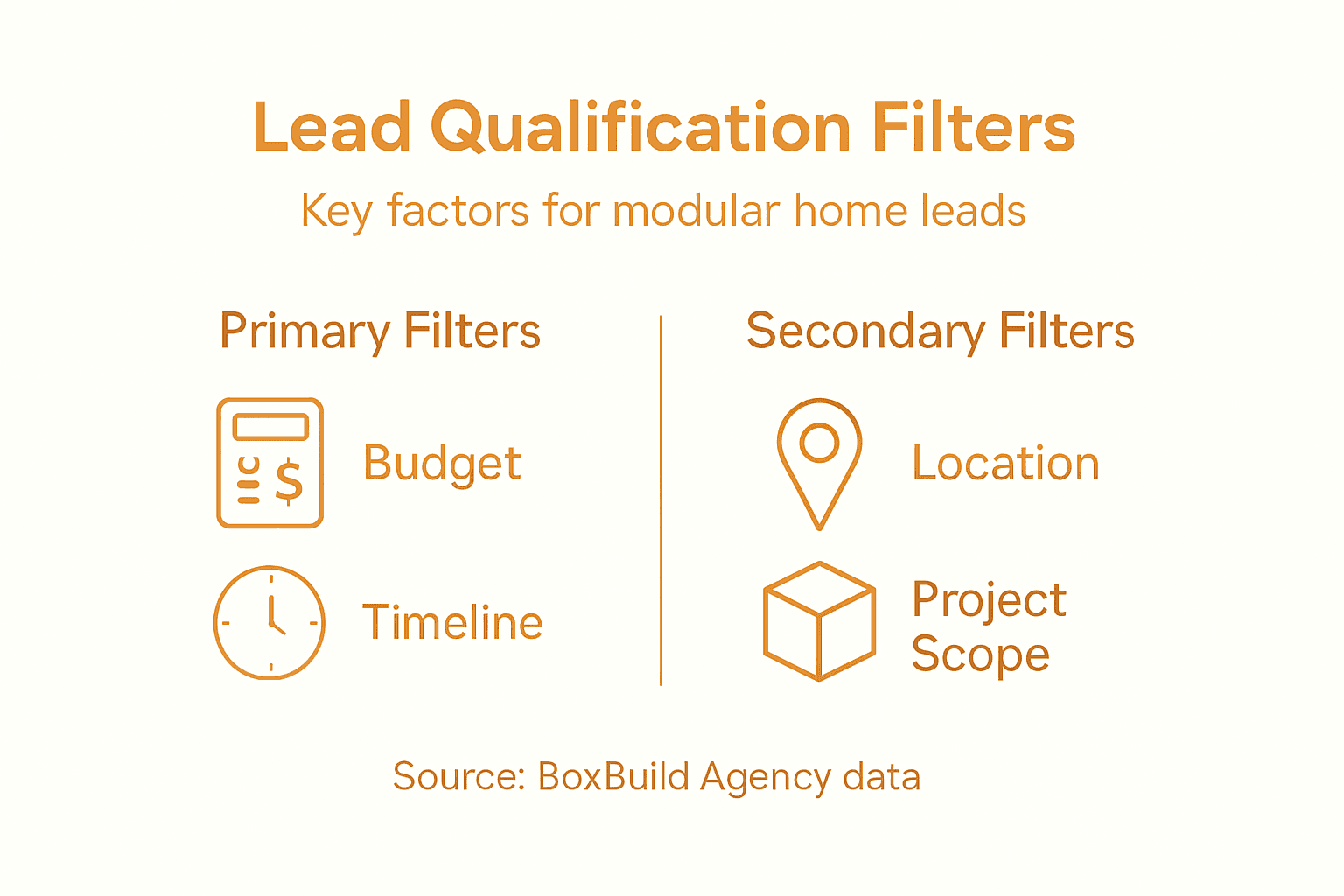
Advanced conversational AI parameters provide a sophisticated framework for defining precise qualification criteria. Develop a multi tier evaluation system that assesses leads across key dimensions such as financial feasibility, project complexity, client alignment, sustainability requirements, and technical compatibility. Your filters should include quantitative metrics like budget range, project timeline, site constraints, and design complexity, alongside qualitative factors such as client communication style, long term relationship potential, and alignment with your company’s core values and expertise.
Computational modularization workflows suggest implementing a structured scoring mechanism that assigns weighted points to different qualification criteria. Create a standardized review template that enables consistent project assessment, allowing your team to quickly determine whether a potential project meets your predefined standards. Consider establishing minimum thresholds for each category that a lead must surpass to progress through your qualification pipeline. This approach ensures that only the most promising and compatible projects receive substantial time and resource investment.
Pro tip: Develop a dynamic qualification matrix that can be easily updated to reflect changing market conditions and your company evolving strategic priorities.
This table summarizes key lead qualification criteria and their business impact:
| Qualification Factor | What It Assesses | Project Impact |
|---|---|---|
| Financial Feasibility | Client funding readiness | Reduces risk of project drop |
| Project Complexity | Technical and logistical demands | Ensures resource alignment |
| Client Alignment | Fit with company values/goals | Drives long-term partnerships |
| Sustainability Preference | Interest in green solutions | Matches modern market trends |
| Technical Compatibility | Ability to meet requirements | Avoids costly redesigns |
Step 5: Verify lead quality before client engagement
Verifying lead quality is a critical checkpoint that separates successful modular home builders from those wasting resources on unproductive prospects. This step ensures you invest your time and expertise only in leads with genuine potential and alignment with your business model.
AI driven evaluation methodologies provide advanced frameworks for comprehensive lead verification. Develop a systematic verification process that goes beyond surface level assessments. Implement a detailed checklist examining financial readiness, project feasibility, technical requirements, and client commitment. Focus on collecting verified documentation such as proof of funding, site survey reports, preliminary design concepts, and clear project objectives. Your verification should include in depth interviews that assess not just the project specifics but also the client relationship potential and long term collaboration opportunities.
Rigorous quality verification processes are essential for mitigating potential risks. Create a multi stage verification protocol that includes technical assessments, financial stability checks, and compatibility evaluations. Use standardized scoring mechanisms that objectively rate each lead across multiple dimensions. This approach allows you to quickly identify high potential projects while avoiding time consuming engagements with leads unlikely to convert or align with your company capabilities.
Pro tip: Establish a quarterly review of your verification criteria to ensure they remain adaptive to changing market conditions and technological advancements in modular construction.
Supercharge Your Lead Qualification Workflow for Modular Homes
Navigating the complexities of lead qualification for modular homes requires precision and smart automation. This article highlights critical steps like lead scoring, targeted capture strategies, and rigorous verification that can transform your project pipeline. If you are aiming to eliminate unproductive leads, reduce wasted resources, and focus on high-value projects that truly align with your expertise, then specialized digital strategies are essential.
At BoxBuild Agency, we empower modular home builders with data-driven marketing solutions, seamless automation, and AI-powered insights to optimize your lead qualification process. Discover how integrating intelligent AI tools and customized Funnels can elevate your engagement and conversion rates. Experience the power of strategic social media campaigns tailored to your ideal clients on our Social Media platform.
Start refining your lead workflow today by partnering with BoxBuild Agency. Visit us at https://www.boxbuild.agency/ and take the first step toward securing more qualified leads and winning high-value modular home projects.
Frequently Asked Questions
How can I assess lead channels for modular homes effectively?
To assess lead channels for modular homes, map out your current lead generation landscape and analyze each channel’s performance metrics. Focus on tracking conversion rates, lead quality, and cost per lead to determine which channels align best with your ideal client profile.
What are effective lead capture strategies for attracting quality prospects?
Develop targeted lead capture strategies by creating detailed client personas that reflect specific preferences. Implement focused landing pages and design calculators to guide potential clients toward engaging with your offerings, ensuring a personal touch.
How do I automate lead scoring and segmentation in my workflow?
Automate your lead scoring and segmentation by using an automated system to assign numeric values based on factors like engagement and project interests. Regularly audit your scoring models every 90 days to keep them accurate and relevant to market changes.
What qualification filters should I establish for evaluating project leads?
Create qualification filters that assess leads based on financial feasibility, project complexity, and client alignment. Implement a scoring mechanism to objectify your evaluation, ensuring that only the most promising leads receive significant resources.
What steps should I take to verify lead quality before engaging clients?
To verify lead quality, establish a systematic process that assesses financial readiness and project feasibility. Use a checklist to collect necessary documentation and conduct in-depth interviews to evaluate the client relationship potential before committing any resources.
Recommended
- Lead Qualification Workflow for Modular Builders Success – BoxBuild
- Lead Generation Process Modular Builders: Step-by-Step Guide – BoxBuild
- Master the Lead Qualification Process ADU for Higher Conversions – BoxBuild
- How to Generate Construction Leads for Modular Builders – BoxBuild
- Custom Home Project Workflow: Step-by-Step Guide for Success