Cost overruns and unpredictable scheduling can disrupt even the most carefully planned modular projects. As more American and Canadian project managers adopt factory-based construction, understanding unique cost drivers becomes essential for accurate budgeting and maximizing profitability. This guide reveals how shifting production from site to factory transforms material procurement, labor efficiency, logistics, and quality control, offering practical insights to help you pinpoint hidden expenses and improve your financial outcomes.
Table of Contents
- Defining Construction Cost Drivers In Modular Projects
- Major Types Of Cost Drivers In Off-Site Construction
- Material Choices And Their Cost Impact
- Process Efficiency And Scheduling Factors
- Budgeting Challenges And Common Mistakes
- Improving Profitability Through Cost Driver Analysis
Key Takeaways
| Point | Details |
|---|---|
| Understanding Cost Drivers | Recognize that key cost drivers in modular construction include material procurement, labor efficiency, schedule compression, and quality control. These factors fundamentally shape project economics and profitability. |
| Holistic Approach to Material Selection | Choose materials strategically to optimize performance and manufacturing compatibility while considering long-term sustainability. Materials impact overall project economics significantly. |
| Efficient Scheduling and Process Optimization | Implement schedule compression techniques and process efficiency tactics to reduce project timelines and labor costs effectively. A systematic approach helps maximize project profitability. |
| Comprehensive Budgeting Strategies | Develop robust financial models that account for modular-specific cost dynamics and maintain contingency for unexpected expenses to enhance budget accuracy and risk management. |
Defining Construction Cost Drivers in Modular Projects
Modular construction represents a transformative approach to building that fundamentally reshapes traditional project economics. At its core, modular construction introduces unique cost dynamics that differ dramatically from conventional on-site building methods. Cost drivers in modular projects emerge from the critical shift between factory-based fabrication and traditional construction processes.
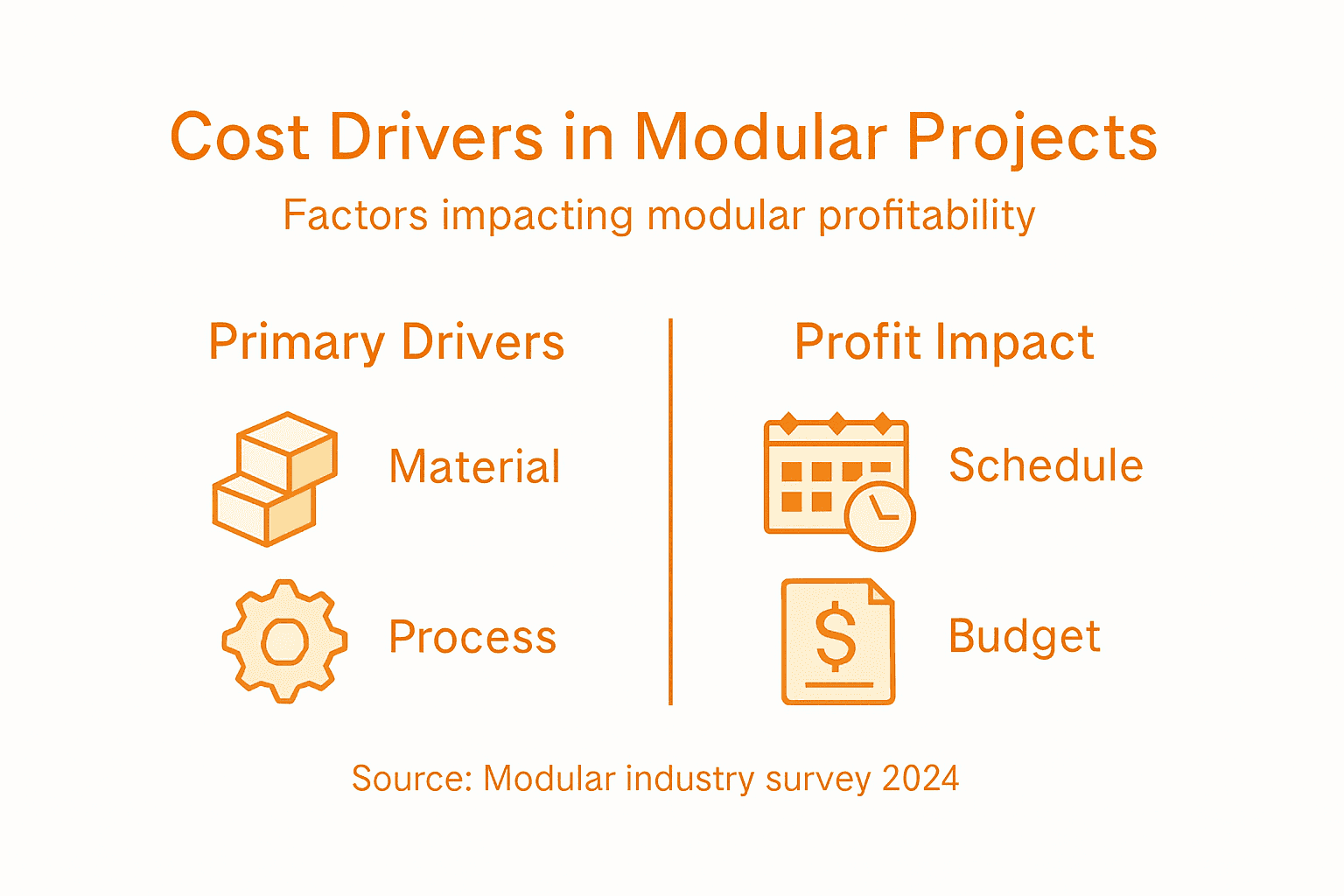
The primary cost drivers in modular construction are distinctly complex and multifaceted:
- Material Procurement: Factory-controlled environments enable bulk purchasing and reduced waste
- Labor Efficiency: Controlled factory settings minimize on-site labor requirements
- Schedule Compression: Parallel manufacturing and site preparation dramatically reduce overall project timelines
- Quality Control: Standardized production processes minimize rework and performance variations
- Transportation and Logistics: Strategic planning of module transportation becomes a significant cost consideration
Understanding these drivers requires recognizing that modular construction is not simply about replacing traditional methods, but fundamentally reimagining construction workflow. Modular building practices target systematic cost optimization through technological innovation, precise engineering, and streamlined production strategies.
Here’s a summary of cost driver roles and their potential business impact in modular construction:
| Cost Driver Category | Main Role in Project | Impact on Profitability |
|---|---|---|
| Material Procurement | Secures bulk materials | Reduces direct costs and waste |
| Labor Efficiency | Minimizes onsite labor | Lowers staffing expenses |
| Schedule Compression | Shortens project timelines | Accelerates revenue generation |
| Quality Control | Standardizes output | Lowers rework and improves longevity |
| Transportation & Logistics | Moves modules efficiently | Minimizes delivery and disruption costs |
The economic advantages of modular construction extend beyond immediate project costs. By minimizing schedule risks, reducing material waste, and improving overall construction predictability, modular approaches create substantial long-term financial benefits for developers and builders.
Pro Tip: Conduct a comprehensive cost-driver analysis early in project planning to identify potential optimization opportunities and minimize unexpected expenses.
Major Types of Cost Drivers in Off-Site Construction
Off-site construction introduces a complex ecosystem of cost drivers that fundamentally differ from traditional building approaches. Modular construction cost dynamics reveal a sophisticated interplay of production, logistics, and economic factors that require strategic management.
The primary categories of cost drivers in off-site construction include:
-
Design and Engineering:
- Advanced digital modeling requirements
- Complex parametric design specifications
- Early design freeze mandates
-
Production Expenses:
- Factory setup and infrastructure costs
- Equipment and tooling investments
- Specialized labor training
-
Logistical Considerations:
- Module transportation expenses
- Site preparation and module placement
- Crane and heavy equipment requirements
-
Supply Chain Management:
- Material procurement strategies
- Vendor coordination
- Inventory control systems
-
Indirect Overhead:
- Quality control processes
- Compliance and certification expenses
- Technology integration costs
These cost drivers demonstrate that off-site construction is not simply about replacing traditional methods, but reimagining the entire construction workflow. Project delivery strategies now integrate digital technologies and sophisticated supply chain management to optimize cost structures.
Successful modular construction requires a holistic approach that anticipates and manages these interconnected cost drivers. By understanding the nuanced economic landscape, builders can develop more precise financial strategies that leverage the inherent advantages of off-site production methods.
Pro Tip: Develop a comprehensive cost-driver mapping exercise during project initiation to identify potential optimization opportunities and create targeted cost management strategies.
Material Choices and Their Cost Impact
Material selection represents a critical strategic decision in modular construction that extends far beyond simple procurement choices. Prefabrication material considerations demonstrate how specific material selections directly influence production efficiency, transportation logistics, and overall project economics.
Key material considerations for cost-effective modular construction include:
-
Performance Characteristics:
- Strength-to-weight ratio
- Thermal insulation properties
- Durability and longevity
- Compatibility with factory production
-
Manufacturing Compatibility:
- Standardization potential
- Repeatability in production
- Ease of fabrication
- Minimal waste generation
-
Transportation Optimization:
- Lightweight materials
- Compact design potential
- Resistance to transportation stress
- Modular assembly requirements
-
Sustainability Factors:
- Recyclability
- Carbon footprint
- Energy efficiency
- Renewable source potential
Automation in material handling reveals that material standardization dramatically impacts production workflows. Advanced manufacturers are increasingly selecting materials that not only meet performance requirements but also integrate seamlessly with automated manufacturing processes.
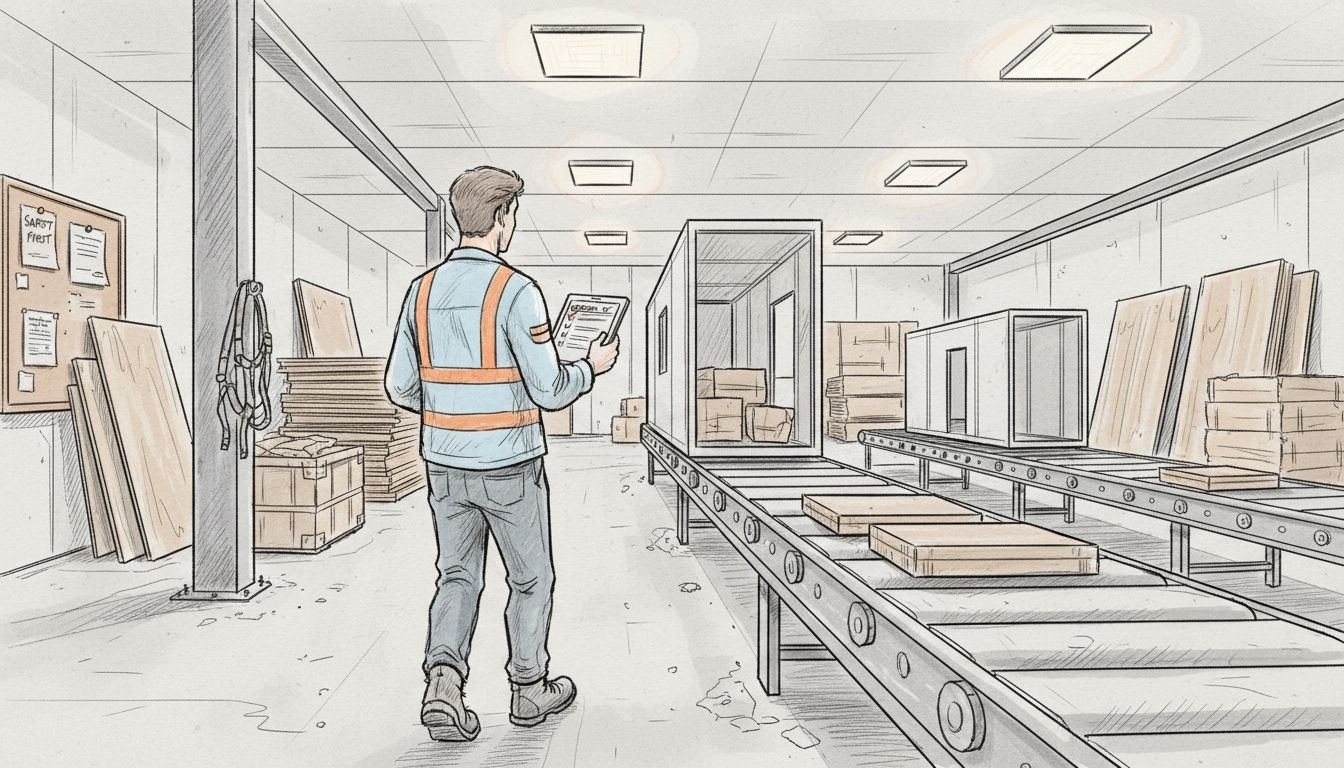
Successful material selection requires a holistic approach that balances initial costs, long-term performance, manufacturing efficiency, and sustainability goals. Builders must view materials as strategic assets that contribute to overall project profitability, not merely as isolated procurement decisions.
Pro Tip: Conduct comprehensive material lifecycle cost analysis during early design phases to identify optimal material choices that balance performance, manufacturability, and long-term economic value.
Process Efficiency and Scheduling Factors
Process efficiency stands at the core of modular construction’s economic advantage. Modular construction scheduling strategies demonstrate how controlled manufacturing environments can dramatically transform project timelines and cost structures.
Key efficiency drivers in modular construction scheduling include:
-
Schedule Compression Techniques:
- Parallel site preparation and module fabrication
- Reduced weather-related production delays
- Predictable manufacturing timeframes
- Minimized on-site construction duration
-
Labor Productivity Optimization:
- Standardized manufacturing processes
- Consistent skill development
- Reduced worker transition times
- Enhanced quality control mechanisms
-
Risk Mitigation Strategies:
- Predictable production schedules
- Limited site disruption potential
- Improved resource allocation
- Reduced unexpected delay scenarios
-
Technology Integration:
- Building Information Modeling (BIM)
- Advanced project management software
- Real-time tracking systems
- Automated workflow coordination
Advanced scheduling tools reveal that modular approaches can compress project timelines by up to 35%, significantly reducing overall labor costs and operational expenses. These efficiency gains stem from integrated planning, technological innovation, and a systematic approach to construction management.
Successful process efficiency requires a holistic view that transcends traditional construction methodologies. Builders must embrace a comprehensive approach that integrates advanced technologies, standardized workflows, and strategic scheduling to maximize project profitability.
Pro Tip: Implement detailed process mapping and critical path analysis during early project stages to identify and eliminate potential scheduling bottlenecks and optimize overall project efficiency.
Budgeting Challenges and Common Mistakes
Modular construction budgeting represents a complex financial landscape fraught with unique challenges that traditional construction approaches cannot fully anticipate. Conceptual cost estimation frameworks reveal significant complexity in accurately predicting project expenses.
Common budgeting mistakes in modular construction include:
-
Early-Stage Estimation Errors:
- Insufficient historical cost data
- Limited understanding of modular processes
- Reliance on traditional construction pricing models
- Underestimating design complexity impacts
-
Cost Overlooking Factors:
- Transportation and logistics expenses
- Factory setup and infrastructure costs
- Supply chain variability
- Specialized equipment investments
-
Operational Budget Challenges:
- Quality control overhead
- Technological integration expenses
- Workforce training investments
- Compliance and certification costs
-
Risk Management Gaps:
- Inadequate contingency planning
- Insufficient understanding of modular workflow
- Limited flexibility in cost projections
- Poor supply chain risk assessment
Modular construction cost control demands a fundamentally different approach compared to traditional construction budgeting. Successful financial management requires deep understanding of factory-based production nuances and the ability to adapt cost control techniques to modular construction’s unique workflow.
See how process efficiency factors compare to budgeting challenges in modular projects:
| Factor Type | Direct Project Benefit | Common Pitfall |
|---|---|---|
| Process Efficiency | Faster completion, fewer delays | Overlooked time savings |
| Budgeting Challenges | Accurate cost forecasting | Underestimating modular costs |
| Technology Integration | Improved tracking and planning | Ignoring software expenses |
| Supply Chain Management | Streamlined materials flow | Missing contingency for disruptions |
Modular construction budgeting is not about eliminating uncertainty, but about creating robust financial frameworks that can accommodate the inherent complexity of off-site manufacturing processes. Builders must develop sophisticated financial models that reflect the dynamic nature of modular project economics.
Pro Tip: Develop comprehensive financial models that incorporate modular-specific cost drivers and maintain at least 15-20% contingency for unexpected supply chain or design adaptation expenses.
Improving Profitability Through Cost Driver Analysis
Cost driver analysis represents a strategic approach to unlocking modular construction’s hidden economic potential. Systematic cost taxonomy enables builders to identify and optimize the most impactful financial levers in their projects.
Key strategies for improving profitability through cost driver analysis include:
-
Design Optimization:
- Early design freeze implementation
- Modular component standardization
- Minimizing design complexity
- Reducing custom fabrication requirements
-
Process Efficiency Tactics:
- Streamlining factory workflows
- Reducing material waste
- Implementing lean manufacturing principles
- Enhancing production predictability
-
Supply Chain Management:
- Developing strategic vendor partnerships
- Negotiating bulk material pricing
- Reducing logistics variability
- Creating flexible procurement models
-
Technology Integration:
- Digital project management tools
- Real-time cost tracking systems
- Predictive analytics platforms
- Automated workflow optimization
Digital project delivery frameworks demonstrate that continuous cost driver analysis enables data-driven decisions that can significantly enhance profit margins.
Successful profitability in modular construction requires a dynamic approach that treats cost management as an ongoing strategic process, not a static budgeting exercise. Builders must develop adaptive frameworks that can quickly respond to changing economic conditions and project requirements.
Pro Tip: Implement quarterly cost driver review sessions that systematically analyze and adjust your project’s financial strategies to maintain competitive profit margins.
Unlock Modular Construction Profitability with Targeted Digital Growth
Understanding cost drivers is essential but navigating the complex economics of modular projects demands more. Key challenges like controlling production expenses, optimizing supply chains, and managing budgeting uncertainties can make or break your project’s success and profitability. This article highlights the critical impact of schedule compression, material procurement, and process efficiency on your bottom line.
At BoxBuild Agency, we specialize in empowering off-site construction companies to overcome these hurdles by harnessing data-driven marketing, automation, and industry expertise. Our tailored strategies in Funnels – BoxBuild and AI – BoxBuild ensure your modular, prefab, or container-based business attracts the right clients and closes more high-value deals faster.
Maximize your market leadership today by partnering with a growth agency that understands your industry’s unique cost drivers. Visit BoxBuild Agency to start generating qualified leads that accelerate your profitability and position your brand for lasting success.
Frequently Asked Questions
What are the primary cost drivers in modular construction?
The main cost drivers in modular construction include material procurement, labor efficiency, schedule compression, quality control, and transportation and logistics. Each of these factors can significantly impact overall project expenses and profitability.
How does material selection affect the costs in modular construction?
Material selection directly influences production efficiency, transportation logistics, and long-term project economics. Choosing materials with favorable performance characteristics, manufacturing compatibility, and sustainability factors can lead to significant cost savings and better project outcomes.
What strategies can improve profitability in modular construction projects?
Improving profitability can be achieved through design optimization, process efficiency tactics, effective supply chain management, and technology integration. Each of these strategies targets specific cost drivers to enhance financial performance.
Why is understanding budgeting challenges important in modular construction?
Understanding budgeting challenges in modular construction is essential to avoid common pitfalls such as underestimating costs, missing out on logistical factors, and inadequate contingency planning. Developing robust financial models can help navigate the complexities inherent in modular projects.
Recommended
- Modular vs Traditional Building: Project Efficiency and Cost – BoxBuild
- 7 Essential Types of Modular Construction for Builders – BoxBuild
- 7 Key Modular Home Advantages for Lead Generation Success – BoxBuild
- 7 Key Modular Home Design Best Practices for Builders – BoxBuild
- Marble Flooring Cost Per Sq Ft Guide 2025
- Why Use 3D Modelling in Urban Design Projects – 3D Urban Design